

A Technical Deep Dive into Oxygen Chamber Pressure
Executive Summary
Oxygen chamber pressure is often one of the most discussed — and frequently misunderstood — aspects of hyperbaric technology.
A common assumption is that higher pressure automatically produces better outcomes. However, current scientific literature, clinical practice, and safety data suggest that the relationship between pressure and physiological benefit is considerably more complex.
Research demonstrates that meaningful biological effects can already occur within the mild hyperbaric range, including increased dissolved oxygen in plasma, improved tissue oxygen availability, and enhanced oxidative metabolism. Studies published in The Journal of Physiological Sciences and the International Journal of Molecular Sciences show that pressures around 1.3–1.5 ATA are capable of producing measurable oxygen-related physiological responses.
At the same time, modern hyperbaric research emphasizes that pressure is only one component of the overall oxygen exposure environment. Physiological outcomes are influenced by the combined interaction of:
- Chamber pressure
- Oxygen concentration
- Exposure duration
- Treatment frequency
- Cumulative oxygen dose
- Individual biological response
Clinical Hyperbaric Oxygen Therapy (HBOT) commonly utilizes higher pressures, typically between 2.0 and 3.0 ATA, for specific medical indications such as carbon monoxide poisoning, decompression sickness, radiation injury, and selected wound-healing applications. These protocols are generally administered under medical supervision and according to defined treatment schedules.
Scientific reviews have also shown that as pressure and cumulative oxygen exposure increase, the incidence of certain adverse effects becomes more common. Published literature has reported increased occurrences of ear barotrauma, sinus discomfort, temporary visual changes, and oxygen-related toxicity concerns under higher-pressure and higher-dose protocols.
Taken together, the current body of evidence suggests that the objective of oxygen chamber design should not simply be to maximize chamber pressure. Rather, the goal is to optimize the overall oxygen environment in a way that balances physiological effectiveness, user comfort, safety considerations, and long-term practicality.
This review examines the scientific, physiological, and safety-related factors that influence oxygen chamber pressure selection, and explains why pressure should be understood as one component of a broader oxygen delivery system rather than an isolated performance metric.

1. Different Objectives: Medical HBOT vs Wellness-Oriented Oxygen Chambers
Internationally, oxygen chambers are generally used in two different contexts:
Clinical Hyperbaric Oxygen Therapy (HBOT)
Higher-pressure Hyperbaric Oxygen Therapy (HBOT) was originally developed for specific medical indications where achieving very high tissue oxygen levels is considered clinically important.
Examples include:
- Carbon monoxide poisoning
- Decompression sickness (“the bends”)
- Arterial gas embolism
- Radiation tissue injury
- Certain non-healing diabetic wounds
- Necrotizing soft tissue infections
- Selected chronic bone infections
In these situations, treatment protocols commonly operate at 2.0–3.0 ATA under medical supervision and according to established clinical guidelines. For example, the Hyperbaric & Diving Medicine Centre at Singapore General Hospital describes treatment pressures generally within this range for clinical applications.
Importantly, these protocols are generally prescribed as structured treatment courses rather than indefinite daily use. Patients are typically treated according to a defined schedule determined by physicians, with pressure level, session duration, treatment frequency, and total number of sessions carefully monitored.
The objective of medical HBOT is to address a specific clinical condition. As a result, the risk-benefit profile is fundamentally different from that of wellness-oriented oxygen chamber use, where the primary goal is long-term comfort, recovery support, relaxation, and sustainable lifestyle integration.
Wellness-Oriented Oxygen Chambers
Wellness-oriented systems are intended for:
- Recovery support
- Relaxation
- General wellness
- Lifestyle integration
- Long-term repeated use
The design priorities are therefore different:
- User comfort
- Safety margin
- Repeatability
- Sustainability
- Practical daily use
This distinction is important because pressures suitable for acute medical treatment are not necessarily optimized for long-term wellness use.
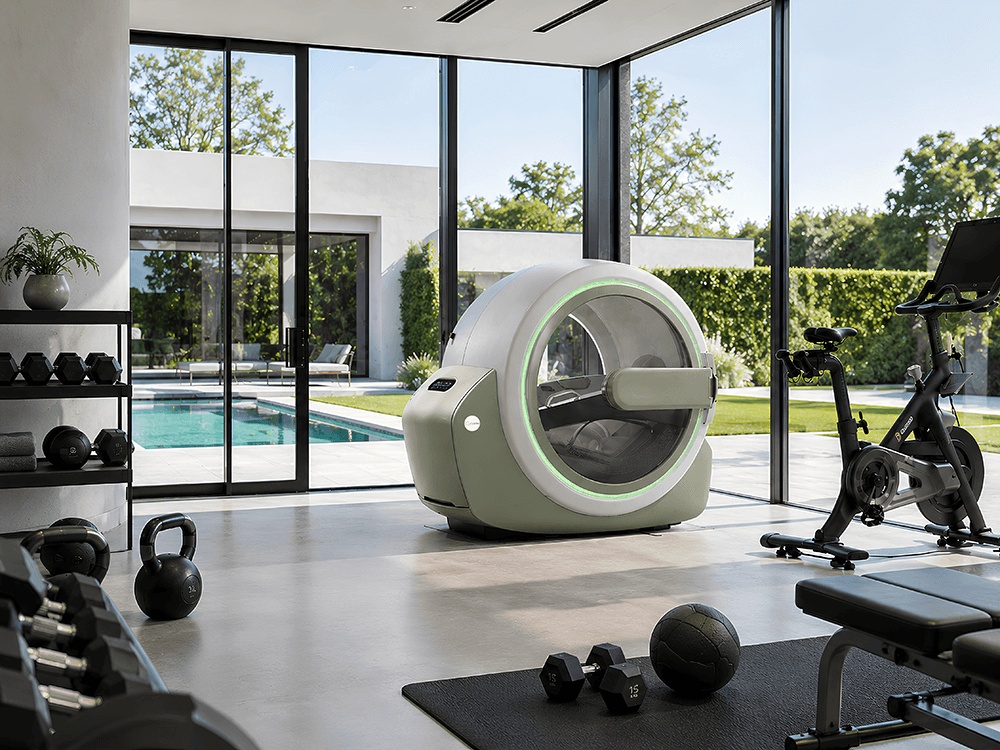
2. The Physiological Goal Is Increased Oxygen Availability
The primary objective of an oxygen chamber is not to achieve the highest possible pressure, but to improve oxygen availability throughout the body.
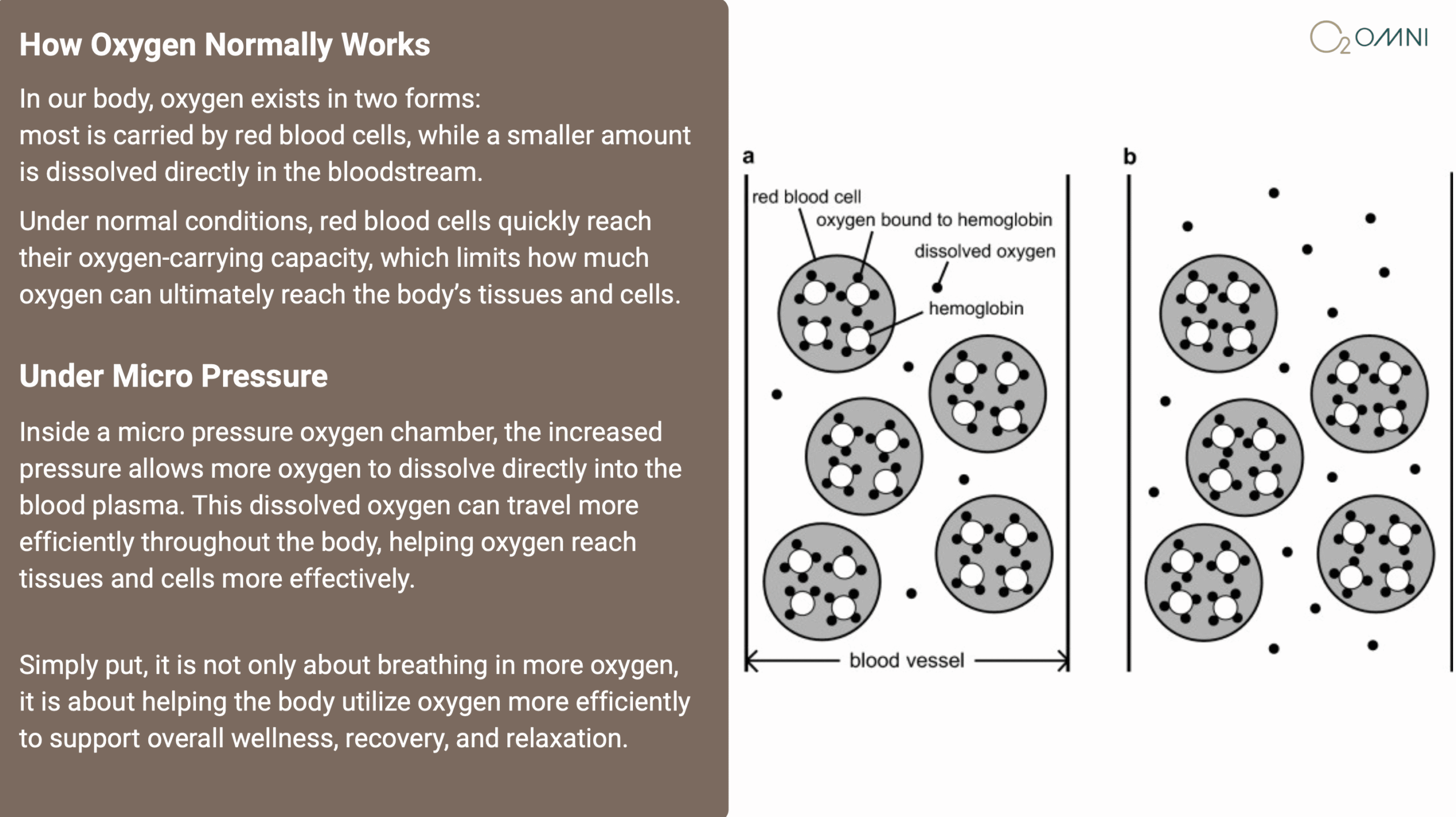
Under normal conditions, most oxygen is transported by hemoglobin within red blood cells. In healthy individuals, hemoglobin is already close to full oxygen saturation, which means that simply increasing oxygen intake does not proportionally increase oxygen carried by red blood cells.
As pressure and oxygen concentration increase, additional oxygen begins to dissolve directly into the blood plasma. This dissolved oxygen can circulate independently of red blood cells and contribute to oxygen delivery throughout the body.
However, oxygen utilization is a dynamic process. The body continuously consumes oxygen to support cellular metabolism, energy production, brain function, tissue repair, and normal physiological activity. Oxygen is not stored indefinitely; it is constantly being used and replenished.
For this reason, the physiological benefit of oxygen chamber use should not be viewed as a one-time accumulation of oxygen, but rather as ongoing support for oxygen availability and utilization.
Scientific literature suggests that meaningful increases in dissolved oxygen can already be achieved within mild hyperbaric ranges. Beyond this point, increasing pressure may continue to increase oxygen availability, but the overall physiological response depends on multiple factors, including exposure duration, treatment frequency, tissue demand, circulation, and individual biological response.
This is why many wellness-oriented oxygen chamber protocols emphasize regular and sustainable use rather than simply pursuing the highest possible pressure. The goal is to support the body’s continuous oxygen requirements in a comfortable and repeatable manner, rather than relying solely on short-term exposure to increasingly higher pressures.
3. Scientific Evidence Supporting Micro Pressure Exposure
One of the most important questions in hyperbaric medicine is whether meaningful physiological effects require high pressures.
The current scientific literature suggests that they do not.
Evidence from The Journal of Physiological Sciences (Ishihara, 2019)
A review published in The Journal of Physiological Sciences examined the biological effects of what the author termed Mild Hyperbaric Oxygen (MHO), typically around 1266–1317 hPa (approximately 1.25–1.30 ATA).
The author reported that mild hyperbaric exposure was capable of increasing oxygen availability and enhancing oxidative metabolism at the cellular level.
Importantly, the paper concluded: “MHO improves oxidative metabolism without barotrauma and excessive production of reactive oxygen species.”
In simple terms, the author observed that relatively modest increases in pressure were sufficient to enhance oxygen utilization while avoiding many of the concerns traditionally associated with higher-pressure hyperbaric environments.
This is a significant finding because it challenges the common assumption that pressure must be increased dramatically before physiological benefits can occur.
The review further reported positive effects on:
- Mitochondrial activity
- Energy metabolism
- Recovery from fatigue
- Tissue oxygen availability
while maintaining a favorable safety profile.
Evidence from International Journal of Molecular Sciences (Cannellotto et al., 2024)
More recently, Cannellotto and colleagues reviewed the mechanism of hyperoxia produced by mild-pressure hyperbaric treatment.
The authors specifically highlighted that:
“Hyperbaric treatment using 1.5 atm generates an oxygen increase in blood and tissues.”
The review explains that at approximately 1.5 ATA, oxygen dissolved in blood plasma increases sufficiently to produce measurable biological effects throughout the body.
Importantly, this finding demonstrates that meaningful tissue oxygenation can occur well below the pressures commonly used in hospital-based HBOT protocols.
The authors further emphasize that the biological effects of hyperbaric exposure are not determined solely by pressure. Oxygen concentration, exposure duration, treatment frequency, and individual physiology all influence the final response.
The UHMS Definition of Hyperbaric Oxygen
The Undersea and Hyperbaric Medical Society (UHMS), widely regarded as the leading international authority in hyperbaric medicine, defines Hyperbaric Oxygen Therapy as treatment delivered at pressures of 1.3 ATA while breathing elevated oxygen concentrations.
This is noteworthy because it demonstrates that the threshold for achieving recognized hyperbaric physiological effects begins well below the 2.0–3.0 ATA range commonly associated with hospital treatment chambers.
In other words:
The scientific question is not whether 1.3–1.5 ATA can produce physiological effects. The literature already demonstrates that it can. The more relevant question becomes: How much additional benefit is obtained by continuing to increase pressure beyond this range? Here is the answer:
- Pressure and Benefit Are Not Linear
A common misconception is that if 1.3 ATA is beneficial, then 2.0 ATA must automatically be better, and 3.0 ATA must be better still.
The literature does not support such a simple relationship.
Once hemoglobin is near full saturation, additional oxygen delivery occurs primarily through dissolved oxygen in plasma.
Although higher pressure continues to increase dissolved oxygen levels, biological responses do not necessarily increase proportionally.
As a result, modern hyperbaric research increasingly focuses on optimization rather than maximization.
The objective is not to achieve the highest ATA possible, but rather to identify the pressure range that provides meaningful oxygen enhancement while maintaining comfort, practicality, and an appropriate safety margin.
Taken together, these studies demonstrate several important points:
- Physiological oxygen-related effects begin at relatively modest pressure elevations.
- Pressures around 1.3–1.5 ATA are already capable of increasing dissolved oxygen and tissue oxygen availability.
- Scientific literature supports measurable biological effects within this range.
- Higher pressures are not automatically synonymous with proportionally greater benefit.
- For repeated wellness-oriented use, the balance between effectiveness, comfort, and long-term sustainability becomes increasingly important.
For this reason, many modern wellness-oriented oxygen chamber systems are designed around the 1.3–1.5 ATA range, where scientifically measurable oxygen enhancement can be achieved without necessarily adopting the higher-pressure protocols commonly reserved for specific medical indications.

4. Hyperbaric Outcomes Depend on the Entire Treatment Environment, Not Pressure Alone
The scientific literature increasingly suggests that hyperbaric outcomes cannot be explained by pressure alone.
An oxygen chamber is not simply a pressure vessel. The physiological response produced during a session is influenced by the interaction of multiple variables, including:
- Chamber pressure
- Oxygen concentration
- Exposure duration
- Treatment frequency
- Individual physiological response
For this reason, modern hyperbaric medicine evaluates the overall oxygen exposure profile rather than focusing exclusively on ATA.
Why Medical HBOT Uses Higher Pressure
Clinical Hyperbaric Oxygen Therapy (HBOT) is designed for specific medical indications such as:
- Carbon monoxide poisoning
- Decompression sickness
- Arterial gas embolism
- Radiation tissue injury
- Certain chronic diabetic wounds
- Necrotizing soft tissue infections
In these situations, physicians may intentionally use higher pressures, commonly between 2.0 and 3.0 ATA, because the treatment objective is to rapidly achieve very high tissue oxygen tensions for a defined medical purpose.
Importantly, these protocols are not designed as indefinite daily wellness routines.
Typical HBOT treatment protocols reported in the literature involve:
- 60–90 minutes per session
- Approximately 2-3 sessions per week
- Total treatment courses ranging from 5 to 15 sessions depending on the indication
- A defined treatment course
- Close monitoring by trained medical personnel
The objective is to address a specific medical condition over a limited treatment period rather than to provide long-term lifestyle support.
More Pressure Does Not Eliminate Biological Limits
While increasing pressure continues to increase dissolved oxygen within plasma, the body’s ability to transport, utilize, and consume oxygen remains governed by biological processes.
As discussed previously, hemoglobin is already near saturation under normal conditions. Additional oxygen delivered under hyperbaric conditions therefore enters the plasma phase.
However, oxygen utilization ultimately depends on:
- Cellular demand
- Mitochondrial activity
- Tissue perfusion
- Metabolic requirements
The body continuously consumes oxygen to support energy production, tissue maintenance, and normal physiological function. Oxygen is therefore part of a dynamic process of delivery, utilization, and consumption rather than a resource that can be stored indefinitely.
This is one reason why many wellness-oriented protocols emphasize consistency and regular use rather than occasional exposure to increasingly higher pressures.
The Importance of Exposure Time and Frequency
Recent literature has highlighted that cumulative oxygen exposure may be just as important as chamber pressure itself.
The 2024 review by Harch and Rhodes described chronic central nervous system oxygen toxicity as being associated with cumulative oxygen exposure rather than pressure alone.
Similarly, the 2023 systematic review published in Frontiers in Medicine found that adverse effects became more common:
- At pressures above 2.0 ATA
- When treatment courses extended beyond 10 sessions
These findings reinforce an important principle: The biological response to hyperbaric exposure depends on total oxygen dose over time rather than ATA alone.
The Role of Oxygen Stability
Another factor that is often overlooked is oxygen delivery consistency.
A hyperbaric system relies not only on pressure but also on a stable and reliable oxygen source.
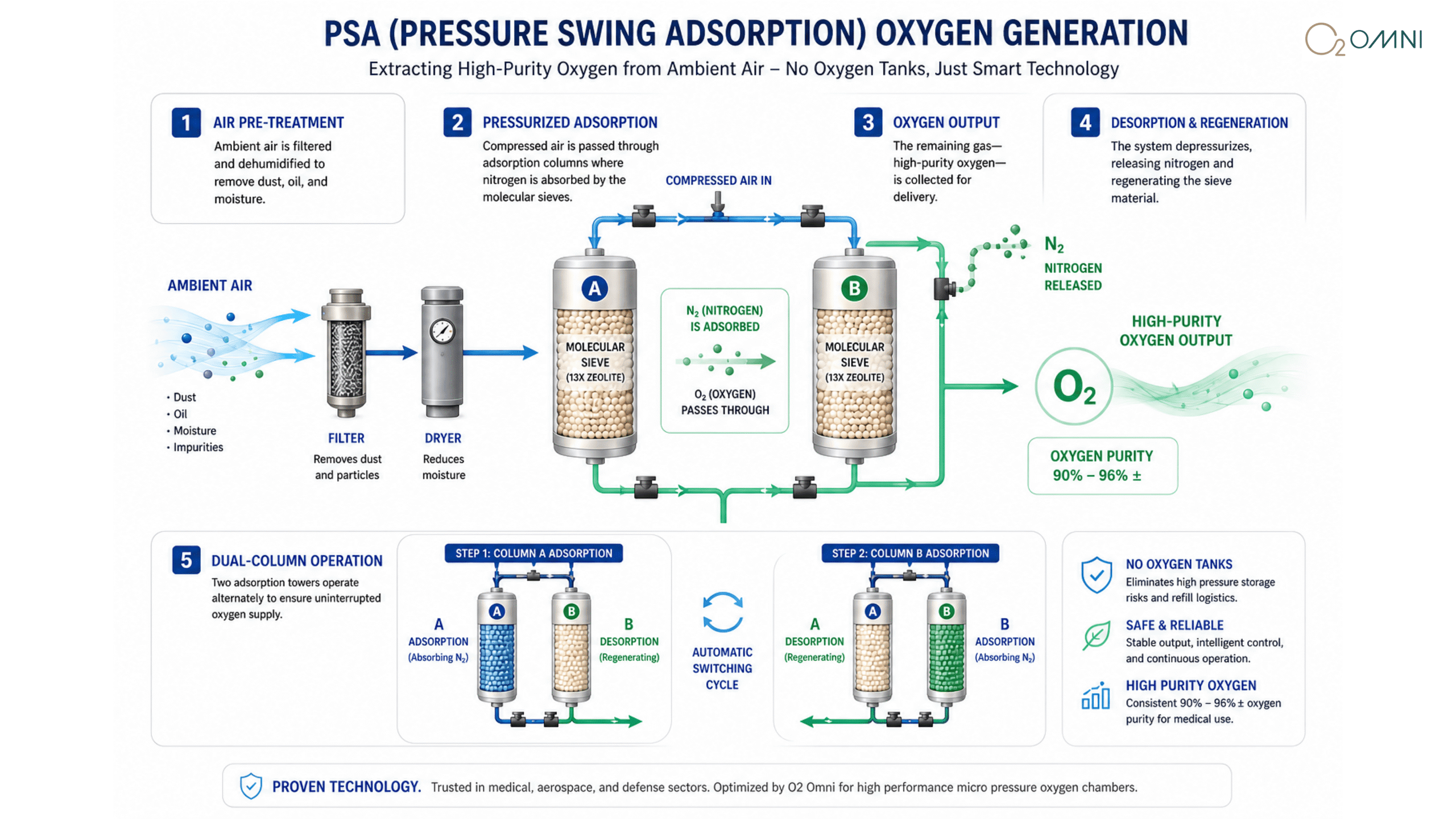
O2Omni oxygen chambers use Pressure Swing Adsorption (PSA) technology to generate high-purity oxygen directly from ambient air.
PSA systems utilize molecular sieve materials that selectively remove nitrogen while concentrating oxygen. This technology is widely used in medical, aerospace, and industrial applications because it provides a continuous oxygen supply without the need for external oxygen cylinders.
From a physiological perspective, maintaining a stable oxygen environment throughout the session is often more important than pursuing the highest possible peak oxygen concentration.
Taken together, current evidence suggests that hyperbaric effectiveness is determined by the combined interaction of pressure, oxygen concentration, exposure duration, treatment frequency, and total oxygen dose.
Higher pressure remains an important tool for specific medical indications. However, for long-term wellness-oriented use, pressure should be viewed as only one component of a broader physiological system.
The scientific objective is therefore not to maximize pressure, but to optimize the overall oxygen environment in a manner that is effective, comfortable, sustainable, and appropriate for the intended application.
5. What Happens as Pressure Increases?
The previous sections have demonstrated that hyperbaric outcomes are influenced not only by pressure, but also by oxygen concentration, treatment duration, session frequency, and cumulative oxygen exposure.
As these variables increase, scientific literature suggests that greater attention should be paid to safety and risk management.
Importantly, this does not mean that higher-pressure Hyperbaric Oxygen Therapy (HBOT) is inherently unsafe. Clinical HBOT remains an established medical treatment for selected conditions when used under appropriate protocols.
However, published research consistently shows that higher-pressure exposure and greater cumulative oxygen doses are associated with a higher incidence of adverse effects.
Evidence from Frontiers in Medicine (2023):
A systematic review and meta-analysis published in Frontiers in Medicine evaluated 24 randomized controlled trials involving 1,497 participants.
The authors reported:
“HBOT is more likely to cause adverse reactions when the chamber pressure is above 2.0 ATA.”
The review further noted that adverse effects became more prominent when treatment courses exceeded 10 sessions.
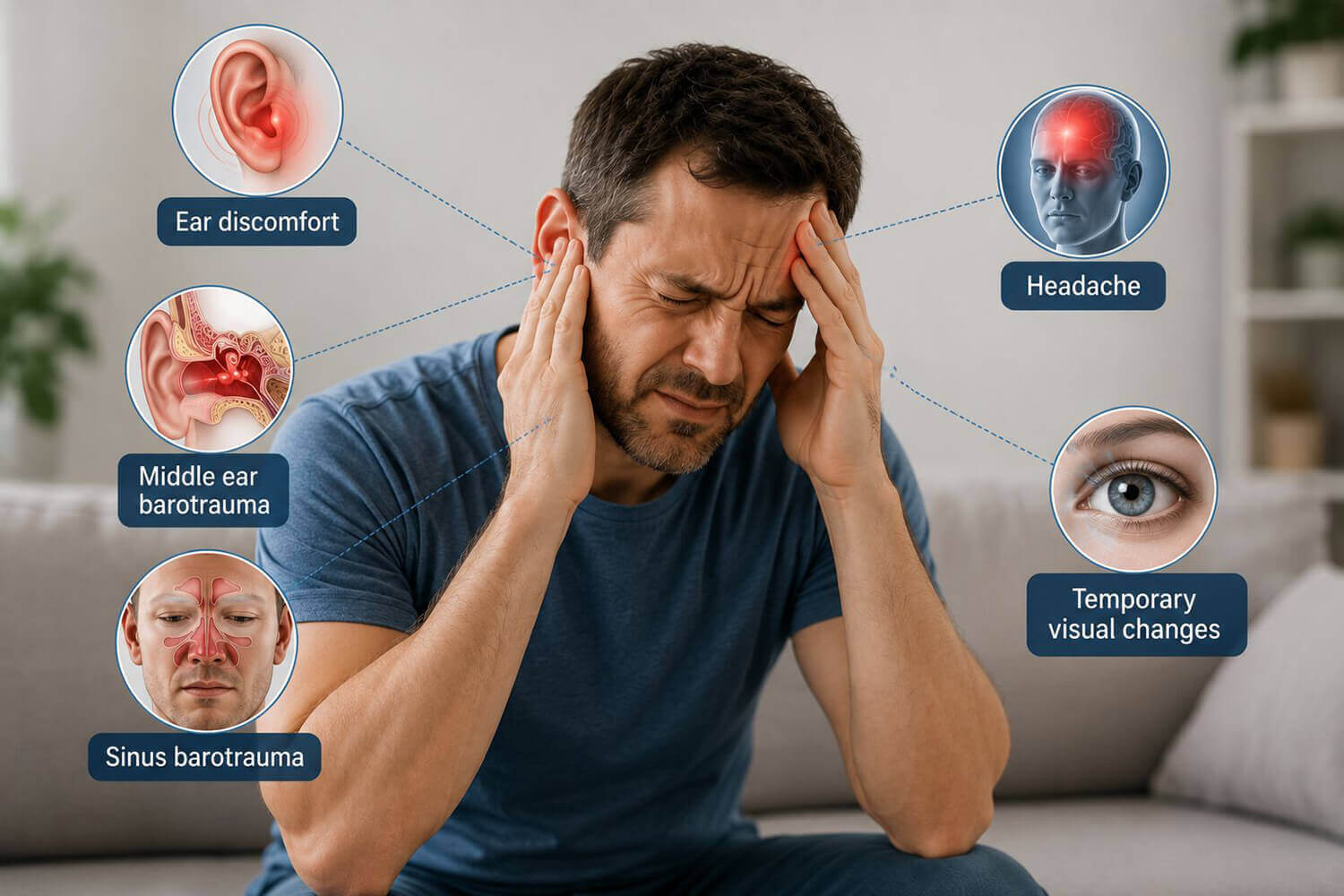
The most frequently reported adverse effects included:
- Ear discomfort
- Middle ear barotrauma
- Sinus barotrauma
- Headache
- Temporary visual changes
The authors concluded that both pressure and cumulative treatment exposure should be considered when evaluating safety.
Why This Matters for Long Term Use
One of the key findings emerging from modern hyperbaric research is that oxygen exposure should be viewed similarly to other physiological interventions.
Just as exercise, medication, or nutrition require appropriate dosing, hyperbaric oxygen exposure also involves a balance between benefit and exposure.
The literature therefore suggests that increasing pressure indefinitely is not necessarily the most effective strategy.
For medical indications, higher pressure HBOT may provide important clinical benefits and is often justified by the severity of the condition being treated.
For wellness-oriented applications, however, the objective is different. The focus is typically on long-term consistency, comfort, recovery support, and sustainable use.
Current evidence suggests that as pressure and cumulative oxygen exposure increase, the importance of monitoring potential adverse effects also increases.
This is one reason why O2omni, a wellness-oriented oxygen chamber systems focus on achieving meaningful physiological oxygen enhancement within a moderate pressure range rather than pursuing the highest possible ATA value.
6. Why 1.3–1.5 ATA Remains an Important Range
In The Journal of Physiological Sciences, Ishihara (2019) reviewed the biological effects of Mild Hyperbaric Oxygen (MHO) exposure around 1.25–1.30 ATA.
The author concluded:
“MHO improves oxidative metabolism without barotrauma and excessive production of reactive oxygen species.”
This finding is significant because it demonstrates that measurable physiological benefits can occur at pressures substantially lower than those commonly used in hospital-based HBOT.
Similarly, Cannellotto et al. (2024), writing in the International Journal of Molecular Sciences, reported:
“Hyperbaric treatment using 1.5 atm generates an oxygen increase in blood and tissues.”
In practical terms, these findings indicate that pressures around 1.3–1.5 ATA are already capable of increasing dissolved oxygen and improving tissue oxygen availability.
The scientific question therefore becomes not whether these pressures are effective, but whether substantially higher pressures are necessary to achieve the intended objective.
The Goal Is Sustainable Oxygen Enhancement
For wellness-oriented applications, the objective is generally different from acute medical treatment.
The goal is not to rapidly achieve the highest possible tissue oxygen tension for a specific medical emergency.
Rather, the objective is to create an oxygen-enriched environment that can be incorporated into a consistent lifestyle routine focused on:
- Recovery support
- Relaxation
- General wellness
- Long term oxygen enhancement
In this context, sustainability becomes an important consideration.
A pressure range that already produces measurable physiological effects may provide a practical balance between effectiveness, comfort, and repeatability.
The scientific literature demonstrates that: Physiological effects occur at approximately 1.3–1.5 ATA.
Dissolved oxygen increases within this range.
Tissue oxygen availability increases within this range.
Many of the adverse-effect discussions in the literature become more prominent at substantially higher pressures and higher cumulative oxygen exposures.
For these reasons, the 1.3–1.5 ATA range has become a commonly adopted operating range among many wellness-oriented oxygen chamber systems worldwide.
Importantly, this should not be interpreted as a claim that higher pressures are ineffective.
Rather, it reflects a practical application of current scientific understanding: meaningful oxygen-related physiological responses can already be achieved within this range, while maintaining an operating environment intended for comfort, repeatability, and long-term lifestyle integration.
Current scientific evidence supports the conclusion that pressures around 1.3–1.5 ATA are capable of producing measurable oxygen-related physiological effects.
At the same time, available safety literature suggests that increasing pressure and cumulative oxygen exposure require progressively greater attention to monitoring and risk management.
For this reason, many wellness-oriented oxygen chamber designs focus on optimizing oxygen availability within the 1.3–1.5 ATA range rather than simply pursuing the highest attainable chamber pressure.
Conclusion
Current scientific evidence does not support the assumption that higher chamber pressure is inherently better.
Research consistently demonstrates that mild hyperbaric exposure around 1.3–1.5 ATA is sufficient to increase dissolved oxygen, improve tissue oxygen availability, and produce measurable physiological effects.
At the same time, both clinical literature and safety analyses indicate that higher-pressure HBOT protocols are associated with increased rates of pressure-related and oxygen-related adverse effects and therefore require more intensive monitoring and risk management.
The most scientifically defensible approach is therefore not to pursue the highest ATA possible, but to select a pressure appropriate for the intended application, treatment objectives, exposure duration, and user profile.
In hyperbaric medicine, optimization is often more important than maximization.
References
Ishihara, A. (2019). Mild hyperbaric oxygen: Mechanisms and effects. The Journal of Physiological Sciences, 69, 573–580. https://doi.org/10.1007/s12576-019-00678-5
Zhang, Y. Y., Zhou, Y. J., & Jian, Y. Y. (2023). Adverse effects of hyperbaric oxygen therapy: A systematic review and meta-analysis. Frontiers in Medicine, 10, 1160774. https://doi.org/10.3389/fmed.2023.1160774
Harch, P. G., & Rhodes, S. (2024). Acute and chronic central nervous system oxidative stress/toxicity during hyperbaric oxygen treatment of subacute and chronic neurological conditions. Frontiers in Neurology, 15, 1341562. https://doi.org/10.3389/fneur.2024.1341562
Cannellotto, M., et al. (2024). Hyperoxia: Effective mechanism of hyperbaric treatment at mild-pressure. International Journal of Molecular Sciences, 25(2), 777. https://doi.org/10.3390/ijms25020777